

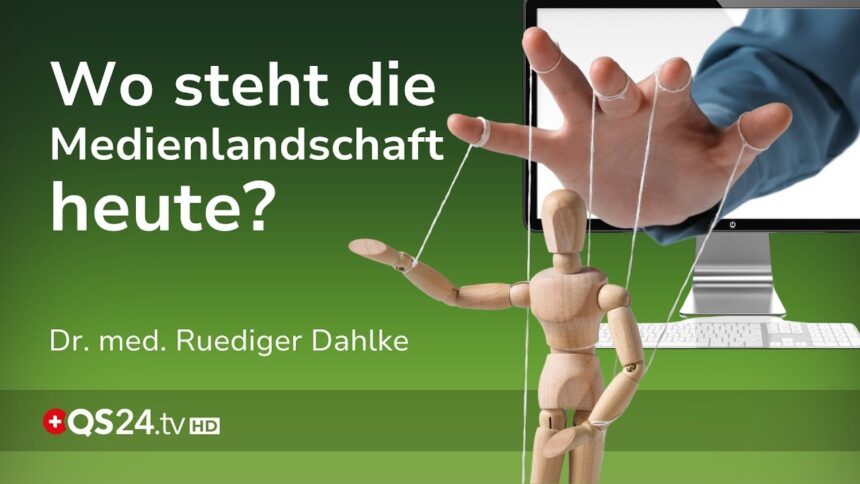
In an insightful conversation between Dr. Rüdiger Dahlke, physician and bestselling author, and Alexander Glogg, founder of the Swiss health television channel QS24, a central theme of modern society is discussed: the role of the media in democracy. In light of current challenges and the ongoing discussions about fake news and disinformation, both experts raise the question of whether the media are still fulfilling their fundamental mission or whether they are becoming lost in one-sided reporting.
Media as the Fourth Estate
The media traditionally function as the „fourth estate“ of the state, holding the other branches of government accountable. This task includes not only disseminating information but also critically examining political decisions and representing the interests of the population. However, Dr. Dahlke and Alexander Glogg agree that the media landscape today is plagued by serious problems.
„How can the media fulfill their role as guardians of democracy when they themselves are infiltrated?“ Glogg asks this question, pointing to concerns that an excessive focus on preventing fake news often leads to a channeling and homogenization of reporting. This development can result in alternative perspectives and critical voices being ignored.
One-sidedness and the loss of diversity
Dahlke emphasizes that one-sided media coverage not only jeopardizes public opinion but also undermines democratic discourse. When media outlets focus their reporting on only one specific perspective, the diversity of opinions and ideas, which is essential for a functioning democracy, is severely restricted. This leads not only to alienation between citizens and political decision-makers but also to a devaluation of the media as a credible source of information.
Political responsibility and media ethics
The experts also see a growing responsibility for the media not only to report objectively but also to critically examine the political agenda of those in power. The loss of this critical scrutiny can have fatal consequences for democracy. The media should build a bridge between the people and politicians by addressing citizens‘ concerns and stimulating political debate.
Open Words Without Censorship
In their conversation, Dr. Dahlke and Alexander Glogg speak frankly and openly about their thoughts, undeterred by the threat of censorship or legal repercussions. They are aware of the sensitive nature of their statements but also know that the issues they address are of paramount importance. The challenges facing the media and the consequences for democracy are too significant to ignore.
„We must encourage the public to engage with these issues and redefine media responsibility,“ Glogg asserts. The conversation aims not only to provide food for thought but also to encourage viewers to critically examine the media landscape and actively embrace their own role in democracy.
Conclusion: A Call for Self-Reflection
With their dialogue, Dr. Rüdiger Dahlke and Alexander Glogg create a space for critical reflection on the role of the media in modern democracy. They urge viewers to question news reports and advocate for a media landscape that is not only informative but also critical and diverse. In a time when fake news and disinformation are omnipresent, it is crucial to promote the media as independent and responsible actors in a democracy.